
You Deserve To Hear This From Me
Six weeks ago, I fell while skiing in Canada. It was a pretty decent fall—I hit the left side of my head and immediately felt like I had some whiplash—but nothing that seemed severe.
As is typical for Richard, he had already zoomed down the mountain and was waiting for me at the turnoff. I remember catching up to him and saying, “I just busted my ass back there, pretty bad,” and, in classic fashion, he looked at me and said, “You’re fine. Let’s go."
So I did.
I had a slight headache for only a few hours and a sore neck for maybe three days, but I skied the rest of the trip. I came home, went back to work—no problems. When my favorite ski resort (Brighton, Utah) got a dump of snow, we booked a last-minute trip to take advantage before the season ended. This year, snow across the West has been at a historical low, and if you ski, then you know—you live for fresh powder. I felt completely fine, and even did my best skiing ever. I came back, went right back to work, and everything felt normal—until it didn’t.
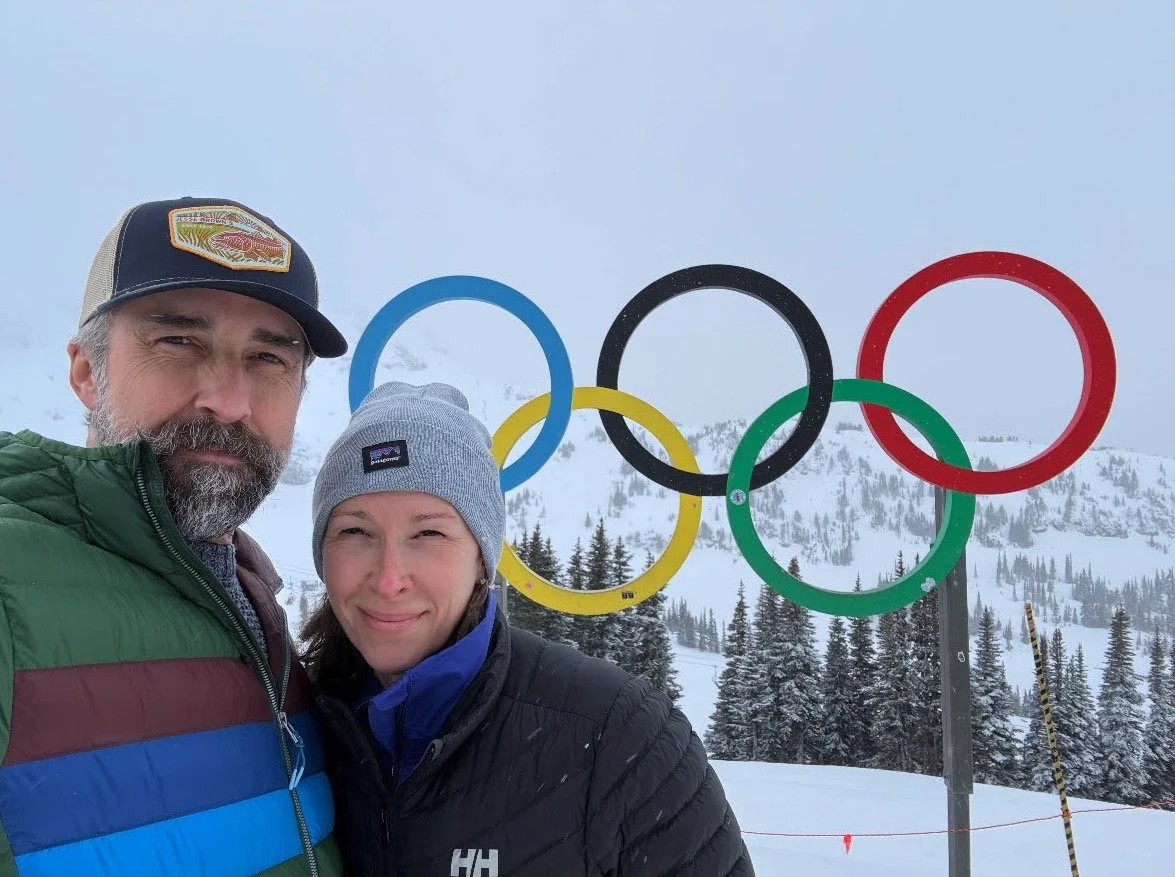
What I didn’t know at the time was that I had a concussion.
Last Wednesday, I was in my office and did something as simple as clearing my throat. Out of nowhere, I felt a sudden, severe pain in the back of my head. About 30 minutes later, I coughed, and the pain increased a hundredfold.
Over the next 24 hours, things unraveled quickly. The pain became unbearable. I started losing my balance. I couldn’t read. Walking without help became difficult. At that point, we knew it was time to go to the hospital.
By the time I got there, I couldn’t speak clearly. I couldn’t remember the date. My brain kept insisting it was 1873—which I knew wasn’t right—but it was the only answer I could come up with. I couldn’t say my own birthdate.
The doctor asked me to repeat a simple phrase. When I tried, what came out didn’t match what I heard. I sounded like a gerbil trying to talk.
It was terrifying.
What I’ve since learned is that post-concussion symptoms can show up weeks to months later—even when you think you’re completely fine.
But here’s the part that’s hard to put into words.
In those moments—when things felt like they were slipping—I didn’t suddenly realize how much my clinic meant to me. I already knew that. I’ve always known that.
This wasn’t some new realization brought on by the accident.
What I felt was the possibility of losing it.
I saw the waiting room. My plants. The barber chair sitting empty. Stacks of labs waiting to be reviewed. Plans not finished. Conversations not yet had. I saw all of you. And all of it was slipping away.
I love what I do. For me, this has never been a job—it’s a purpose.
Right now, I am improving every day, but I am not fully back yet. I’m having some strange and frustrating symptoms. For example, the yellow backpack I carry to work every single day—I cannot recognize it as mine. I know it’s mine logically—Richard opened it to show me my belongings inside—but it doesn’t feel like mine. My speech is still impaired, and my balance is still off.
Brain injuries don’t respond well to being rushed. As much as every part of me wants to push through and get back to full speed, I know that healing the right way is the only way I return to you fully present and fully myself.
So I’m asking for your patience.
Please hold onto your appointments for now—we will contact you individually if anything needs to be adjusted. If you missed your appointment this past week, hang tight. As soon as I have a clearer timeline, we will get you rescheduled. For those of you who showed up to find the office locked, please accept my apologies—in the middle of this crisis, everyone is doing the best they can, but some things were missed.
My assistant, Juliet, is answering the phones and keeping me updated daily, as I’m still having difficulty reading. Those of you with upcoming lab draws will be hearing from my nurse, Emily.
Things may move slower than usual. Responses may take longer. The clinic may not run the way it normally does—for now. But we are still here, and I am still here, getting better each day.
And I need you to hear this part clearly—
There is not a single one of you who is “just a patient” to me. I know your stories. I know what you’re carrying.I know your burdens. I know what you’re working toward. You have trusted me with things that matter—your health, your time, your energy, your lives.
That is not something I take lightly. Not for a second.
This clinic exists because of you. Every chart, every lab, every conversation—it all matters to me because you matter to me.
I look forward to being back with you soon—stronger, clearer, and yes… probably a slightly more cautious skier.
With gratitude,
Julia

Neuroplasticity is something I talk about a lot in the clinic—your brain is constantly rewiring itself based on what you repeatedly think, do, and focus on. The habits you build literally shape your brain. Right now, I’m being very intentional with that. I’m off the news, off social media, and focusing on all things positive. This is one of the most powerful examples of that mindset.
My favorite speech of all time—Jim Valvano accepting the Arthur Ashe Courage Award
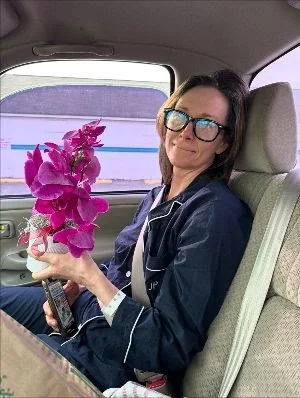
Discharge day. I had been through the ringer but I was so happy to be going home.